4 min to read
Design principles you need to know
Software development design principles or design principles (for short) are the rules of desgining software, one of the most important terms in software development industry. Design principles can be understood as advices for you to design a program that easy to develop and easy to maintain. Keep in mind that design principles are different from design patterns. These two terms give you the similar performance but slightly different concepts.
I have written about the SOLID principles, however I’m gonna share some more principles that are also interesting beside SOLID.
DRY
DRY is a short term for Don’t Repeat Yourself. DRY wants to tell you to stop repeating your code. DRY is not only applied in coding but also in writting documentation or desgining database schemas, etc.
By implementing DRY will help you maintain the code better, or solve the problems of changing the logic of the system a lot easier later on.
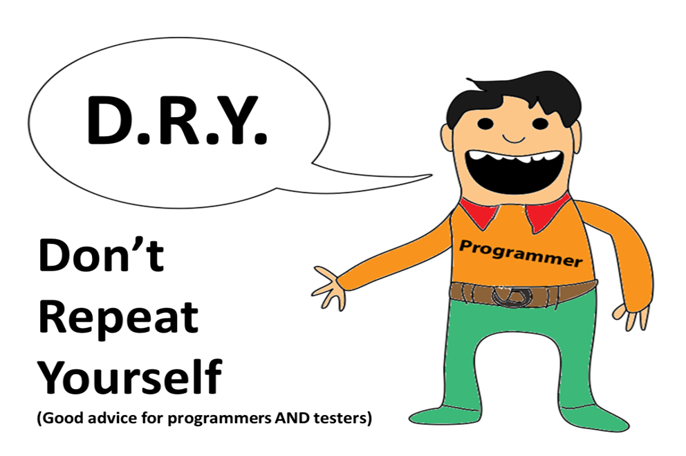
There is also another term people often refer to the opposite concept. WET can be understood as write every time, write everything twice, we enjoy typing or waste everyone’s time. In short, if you violate DRY principle, you will get WET.
KISS
KISS stands for Keep It Simple, Stupid. The KISS principle refers to the fact that simple should be set as the goal of every system design and most system will work best when it is kept in a simple state, instead of being complicated. Any attempt to make unnecessary problems more complex should be removed.

You might find that KISS principle is very similar to many famous quotes. For instance, Simplcity is the ultimate sophistication, Make simple tasks simple. However, this principle needs to be understood properly. The term simple here is just a problem solving, not simple to the point where it is impossible to operate the system as desired.
YAGNI
The term YAGNI stands for You aren’t gonna need it. YAGNI is the principle that is introduced in extreme programming. It states that you should never need to include functions until they are absolutely necessary, or only implement the function that you feel you need not the one you feel that you might need it later.
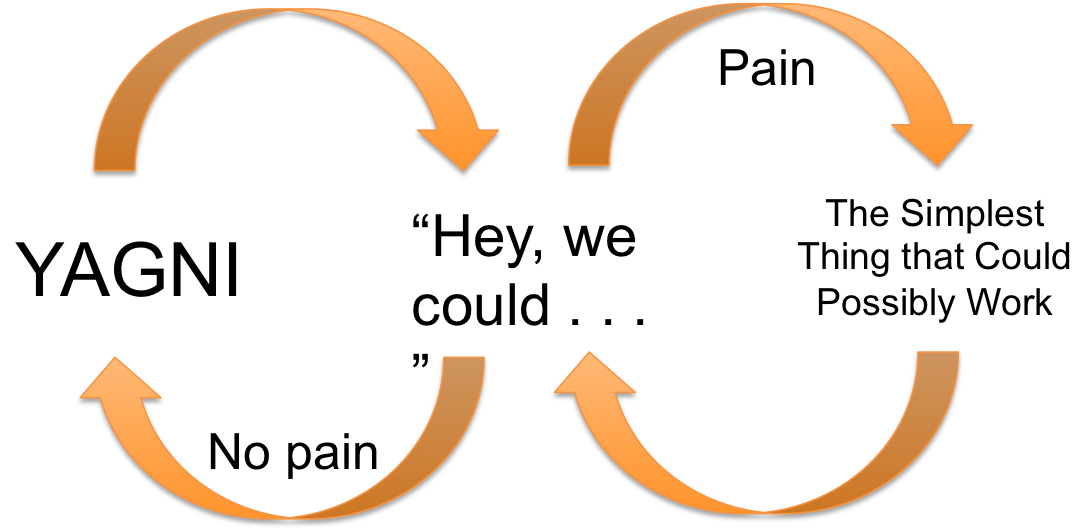
Martin Fowler addressed 4 issues of YAGNI as follow:
-
Cost of building: It’s when you make the function and you don’t really need it at the end. It wastes you lots of effort in designing, testing, and debugging.
-
Cost of repair: When the function you are working on is neccessary but you implement it in an unreasonable way. it will take you lots of effort to re-plan, re-code and retest the functionality you did because that’s not really what you need.
-
Cost of delay: In any case, you will encounter this problem. You are wasting time on a function that you do not need at the moment which leads to the fact that the functions needed to be implemented at the present time cannot be completed and released soon.
-
Cost of carry: In any case, you will also encounter this problem. You are adding a new amount of code to your project, making the system more complex and will take more effort to maintain, modify and debug.
In fact it is difficult to define the boundaries of YAGNI. There are many features or logic sections that you will have to consider whether or not it is YAGNI. Therefore, it is neccessary to have clear mind about YAGNI. Martin Fowler also made a suggestion that said “YAGNI only applies to the ability to be built into the software to support presumptive feature, it does not apply to the effort to make the software easier to modify”. The YAGNI principle should only be used when you plan to add a feature that you anticipate to use in the future, rather than applying YAGNI in an effort to make the software easier to edit and maintain.
Boy Scout Rule
Boy Scout Rule is a principle that refer to the true rules of the Boy Scouts of America. The rules states that “Leave the campground cleaner than you found it”. Basically saying keep the campsite as clean as when you first arrive. The Boy Scout Rule is applied in software design with content such as keeping the code cleaner than before the time you make any edits.
Boy Scout Rule is expressed in many way: Always leave the code you’re editing a little better than you found it, always leave the code cleaner/better than you found it
SoC (Separation of Concerns)
The idea of Separation of Concerns is to split the system into smaller components and functions, so that they have less in common (in terms of functionality), or the less dependent on each other the better. When components are integrated into the system, they interact with each other via interface information, or open APIs, without having to know how the other components are built or implemented.
Separation of Concerns is a very important principle and is used a lot in the design and development of modern software.


Comments